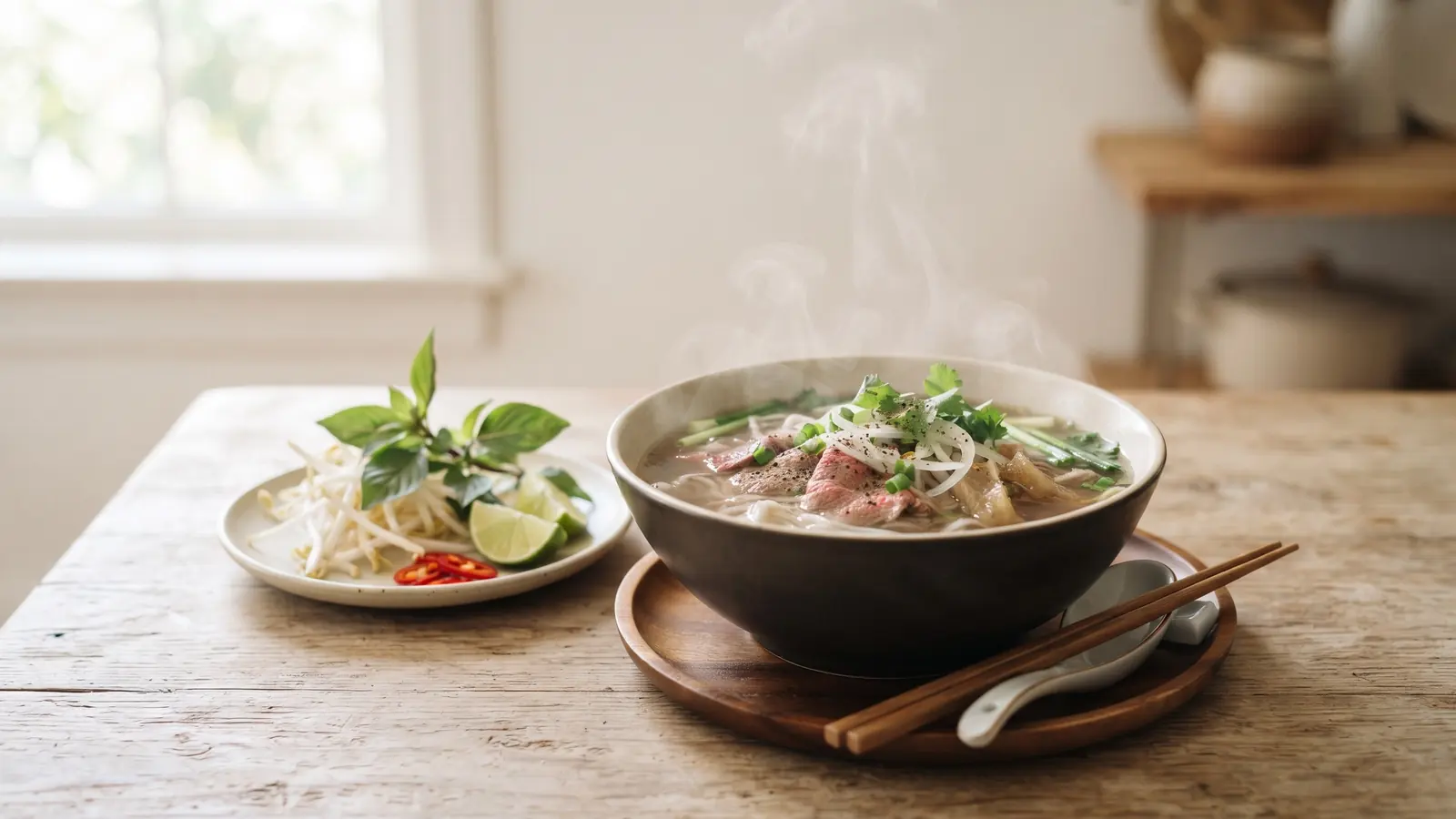
Short answer
Bun bo hue is a spicy beef noodle soup from Hue in central Vietnam. Its red-orange broth is built on beef bones, lemongrass, chili oil and fermented shrimp paste, and it is served over thick, round rice noodles with fresh herbs and shredded cabbage.
Bun bo hue is a spicy Vietnamese beef noodle soup from the city of Hue in central Vietnam, made with beef bones and shank, lemongrass, chili oil and fermented shrimp paste. Its red-orange broth is poured over thick, round rice noodles and topped with herbs, cabbage and lime. It is louder and spicier than pho.
What is bun bo hue?
Bun bo hue (also written bún bò Huế) is a noodle soup named for Hue, the former imperial capital of Vietnam, where it is considered a local specialty. “Bun” means round rice vermicelli, “bo” means beef and “Hue” names the city.
The soup is known for a bold, layered broth: sweet from long-simmered bones, sharp from lemongrass, hot from chili and savory-funky from shrimp paste. People in southern Vietnam and in Vietnamese communities abroad also eat bun bo hue widely, and many restaurants serve it as a house specialty.
What is in bun bo hue?
A bowl of bun bo hue contains a red-orange broth, thick round rice noodles, sliced beef and a pile of fresh garnishes. The thick noodles and the lemongrass are what set it apart at a glance.
- Broth: beef bones, lemongrass stalks, onion, ginger, rock sugar, fish sauce and fermented shrimp paste (mam ruoc).
- Color and heat: chili oil made with annatto seeds, lemongrass and chili flakes.
- Noodles: bun, round rice noodles that are thicker than the vermicelli used in other dishes.
- Beef: shank, brisket or oxtail, sliced after simmering.
- Garnishes: shredded cabbage, banana blossom, herbs such as Vietnamese coriander and mint, bean sprouts, sliced onion and lime.
How is bun bo hue different from pho?
Bun bo hue differs from pho in its broth, noodles and heat. Pho is a clear, gently spiced soup on flat noodles, while bun bo hue is a bright red, chili-and-lemongrass soup on thick round noodles.
| Feature | Bun bo hue | Pho |
|---|---|---|
| Region | Central Vietnam (Hue) | Northern Vietnam, now national |
| Broth | Red-orange, spicy, lemongrass, shrimp paste | Clear, sweet-savory, star anise and cinnamon |
| Noodles | Thick, round | Flat, ribbon-like |
| Heat | Noticeably spicy | Mild unless chili is added |
| Key flavor | Lemongrass and fermented shrimp | Charred onion, ginger and warm spices |
| Garnish | Cabbage, banana blossom, herbs, lime | Sprouts, basil, culantro, lime |
Pho rewards a quiet, balanced spoonful. Bun bo hue tends to be eaten with a squeeze of lime and a spoonful of extra chili oil.
How is bun bo hue made?
Bun bo hue is made by simmering beef bones and shank with lemongrass, seasoning with fish sauce and shrimp paste, adding a chili and annatto oil, and serving it over cooked noodles. The process takes several hours but is mostly hands-off.
- Parboil beef bones and shank, drain and rinse to remove scum.
- Simmer them in fresh water with smashed lemongrass stalks, onion and ginger for two to three hours, skimming as needed.
- Dissolve shrimp paste in a little cold water, let it settle, and pour the clear liquid into the pot, discarding the sediment.
- Season with fish sauce, rock sugar and salt.
- Heat oil, fry minced lemongrass, shallot, annatto seeds and chili flakes, then stir this red oil into the broth.
- Cook the noodles, slice the beef and assemble the bowls with herbs and cabbage.
Removing the sediment from the shrimp paste keeps the broth from tasting muddy and bitter.
What is mam ruoc, and can you leave it out?
Mam ruoc is a fermented shrimp paste made from tiny shrimp and salt, and it gives bun bo hue its savory depth. The flavor is strong in the jar and much softer once it is dissolved in broth.
You can leave it out, but the soup will taste noticeably lighter and less like the traditional version. Some cooks increase the fish sauce slightly to compensate. Anyone with a shellfish allergy should skip the paste, and should also check any prepared bun bo hue seasoning blend, since many contain it.
What is lemongrass, and how do you prepare it?
Lemongrass is a tall grass with a pale, woody base and a lemony, floral aroma, and it is the main aromatic in bun bo hue. Only the lower, firm part is used.
- Cut off the leafy tops and the dry root end.
- Peel away one or two tough outer layers.
- Smash the stalk with the back of a knife so it releases oil.
- Tie or cut it into long pieces for the broth, and mince the tender inner part for the chili oil.
Fresh lemongrass keeps best wrapped in the refrigerator, and it also freezes well chopped.
How do you eat bun bo hue?
Bun bo hue is eaten with chopsticks and a spoon, with garnishes added gradually. Start by tasting the broth, then add cabbage, herbs and lime to adjust.
- Tear the herbs and drop them in along with a handful of shredded cabbage.
- Squeeze a lime wedge over the bowl.
- Add chili oil or sliced fresh chili one spoon at a time.
- Lift noodles and beef together so each bite includes broth and meat.
Many Vietnamese cooks eat the soup at breakfast or lunch, though restaurants serve it all day.
What would you buy to make bun bo hue at home?
A home bun bo hue needs beef bones and shank, lemongrass, shrimp paste, annatto seeds, chili flakes, thick round rice noodles, shallots and fresh herbs. An Asian grocery is the usual place to find shrimp paste, annatto and the noodles.
The guide has not confirmed which of these ingredients are on the shelves of Jason’s Best Asian Market. Its public listings describe fresh fruit, vegetables, seafood, spices and seasonings, and pantry staples, and no stock list or prices are published. Ask by phone at +1 407-785-1112 before making a trip for a particular jar or noodle brand. See the hours and location page for opening times and the menu page for the store’s departments. This guide is independent and takes no orders.
Common questions
Is bun bo hue the same as pho?
No. Pho has a clear, spice-scented broth and flat rice noodles, while bun bo hue has a red, lemongrass and chili broth, thick round noodles and a funky shrimp paste note. Bun bo hue is also much spicier.
Why is bun bo hue red?
The color comes from chili oil, usually cooked with annatto seeds and lemongrass. Annatto gives a warm orange tint and little heat, while the chili oil adds the spice and the red tone.
What does bun bo hue taste like?
Bun bo hue tastes savory, spicy and citrusy from lemongrass, with a deep beef flavor and a faint fermented, salty edge from shrimp paste. A squeeze of lime at the table brightens the whole bowl.
Can bun bo hue be made without shrimp paste?
It can, but the flavor changes noticeably. Shrimp paste gives the broth its signature depth. Some cooks substitute extra fish sauce, though the result is lighter. Shellfish allergy is also a reason to skip it.
Which beef cut is used in bun bo hue?
Beef shank is the classic choice, sliced thin after simmering. Cooks also use brisket, oxtail or beef bones for the broth. The goal is tender meat and a rich broth.
This page is part of the independent guide to Jason's Best Asian Market, which has the address, hours and menu.
This article is general information from an independent guide, not from Jason's Best Asian Market itself. For the store’s current details see hours and location.