Short answer
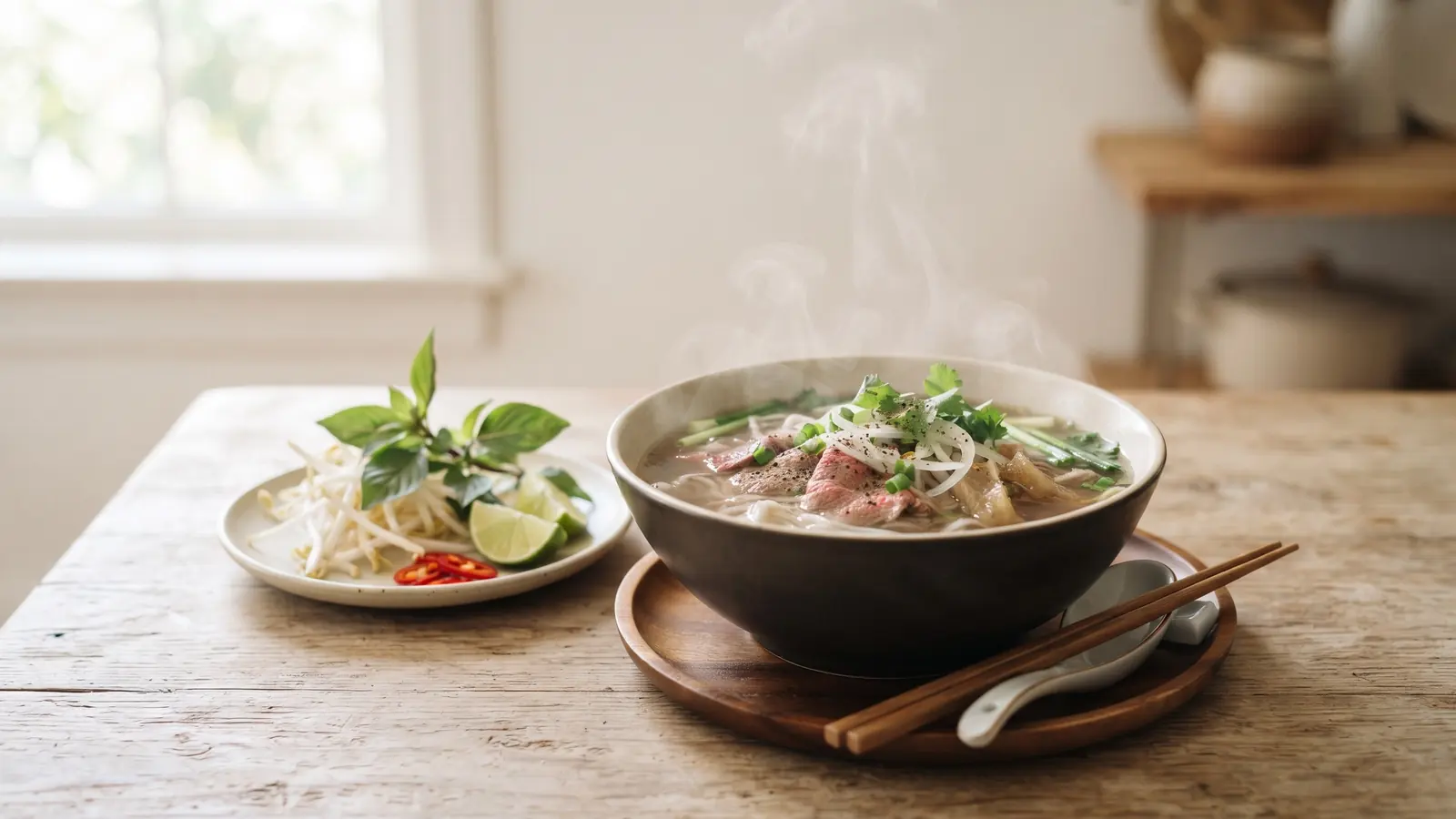
Pho is a Vietnamese soup of flat rice noodles in a clear broth simmered for hours with charred onion, ginger and spices such as star anise and cinnamon, topped with thin beef or chicken, then finished at the table with herbs, bean sprouts and lime.
Pho is a Vietnamese noodle soup made of flat rice noodles in a clear, fragrant broth, simmered for hours with beef or chicken bones, charred onion, ginger and warm spices. Thin slices of meat go on top, and each diner adds herbs, bean sprouts and lime at the table. Pho is eaten at any hour, and most often at breakfast in Vietnam.
What is pho?
Pho (written phở in Vietnamese, pronounced roughly “fuh”) is a rice noodle soup from northern Vietnam that spread across the whole country and then the world. Pho has three parts: a spiced broth, banh pho noodles and sliced meat.
The broth is the point. Pho broth is savory and slightly sweet, scented with star anise, cinnamon and clove rather than chili or sourness. Most historians place the dish’s rise in the early twentieth century around Hanoi, but exactly how pho began is still debated, and cooks in different regions tell different stories.
What is in a bowl of pho?
A bowl of pho holds broth, banh pho rice noodles, thin slices of beef or chicken, scallion and onion, plus a plate of fresh garnishes served on the side.
- Broth: beef bones (or chicken), charred onion and ginger, star anise, cinnamon stick, clove, coriander seed, black cardamom and fish sauce.
- Noodles: flat, white rice noodles called banh pho, soft and slightly chewy.
- Meat: thinly sliced raw beef that cooks in the hot broth, longer-cooked cuts such as brisket and flank, or poached chicken.
- Garnishes: bean sprouts, Thai basil, culantro (sawtooth herb), sliced chili and lime wedges.
- Table sauces: hoisin sauce and chili sauce, used mostly in the south.
What are the main types of pho?
Pho comes in two protein families, beef (pho bo) and chicken (pho ga), and then in many beef cut combinations. Each cut has a Vietnamese name that appears on menus.
| Name | What it is |
|---|---|
| Pho tai | Rare sliced beef that cooks in the hot broth |
| Pho chin | Well-done beef, often brisket |
| Pho nam | Flank steak |
| Pho gau | Fatty brisket |
| Pho gan | Beef tendon |
| Pho bo vien | Beef meatballs |
| Pho ga | Chicken, with a lighter broth |
Combination bowls, often called “special” or “dac biet”, mix several of these in one serving.
How is pho made?
Pho is made by cleaning bones, simmering them for hours with charred aromatics and toasted spices, seasoning the broth, and assembling the bowl just before serving. The long, gentle simmer gives clarity and depth.
- Parboil beef bones for several minutes, drain and rinse to remove scum.
- Char halved onions and a piece of ginger over a flame or under a broiler.
- Toast star anise, cinnamon, clove, coriander seed and cardamom until fragrant.
- Simmer the bones, aromatics and spices in fresh water on low heat for several hours, skimming often.
- Season with fish sauce, salt and a little rock sugar, then strain.
- Soak or briefly cook the rice noodles, place them in a bowl, add the meat and ladle boiling broth over.
Chicken pho follows the same method but is simmered for a shorter time, because chicken bones give up flavor faster.
What is the difference between northern and southern pho?
Northern pho is plainer and focuses on the broth, while southern pho comes with a large plate of herbs, bean sprouts and sauces. The two styles share the same base idea.
| Feature | Northern (Hanoi) style | Southern (Saigon) style |
|---|---|---|
| Noodles | Wider, flatter | Often thinner |
| Garnish | Scallion, onion, sometimes chili | Bean sprouts, basil, culantro, lime, chili |
| Sauces | Used sparingly or not at all | Hoisin and chili sauce on the table |
| Broth | Clear, savory, less sweet | A little sweeter |
Neither style is the single correct one. Many restaurants outside Vietnam serve the southern style because that is the version that spread most widely.
How do you eat pho?
Taste the broth first, then add garnishes a little at a time so the soup stays hot and balanced. Most diners squeeze in lime, tear a few herbs and drop in sprouts.
- Try a spoonful of plain broth before adding anything.
- Add bean sprouts and herbs, pushing them below the surface so they soften.
- Squeeze one lime wedge, then add sliced chili to taste.
- Use chopsticks for noodles and the spoon for broth, lifting noodles into the spoon.
- Keep the hoisin and chili sauce in a small side dish for dipping meat rather than pouring it into the broth, which keeps the broth’s own flavor intact.
How is pho different from other Vietnamese noodle soups?
Pho is defined by its clear, spice-scented broth and flat rice noodles, while other Vietnamese noodle soups use different broths and noodle shapes. The confusion usually comes from the shared word “noodle soup”.
- Bun bo hue is a central Vietnamese soup with a red, lemongrass and chili broth and thick round noodles, much spicier than pho.
- Hu tieu is a southern soup with a lighter broth and chewy rice or tapioca noodles, served as a soup or a dry bowl.
- Bun rieu is a tomato and crab-based soup with round vermicelli.
- Mi soups use egg or wheat noodles instead of rice noodles.
Ramen, a Japanese wheat noodle soup, and Chinese beef noodle soup are separate dishes, though pho’s French-era history and Chinese influence on Vietnamese cooking are often mentioned by food writers.
Why do cooks char the onion and ginger?
Charring onion and ginger adds a smoky sweetness and rounds off the sharp edge of raw aromatics, which is why nearly every pho recipe includes this step. The char is a flavor tool, not decoration.
Hold halved, unpeeled onions and a thick piece of ginger over a gas flame, or place them under a hot broiler, until the skin blackens in patches. Rinse off the loose burnt bits before adding the pieces to the pot. The inside should be soft and fragrant, not burned through.
What do you need to cook pho at home?
A home pho shopping list covers bones, aromatics, spices, dried rice noodles and fresh herbs, and most of it comes from an Asian grocery store.
- Beef bones and a little brisket or flank, or a whole chicken
- Yellow onions and a large piece of ginger
- Star anise, cinnamon sticks, cloves, coriander seed, black cardamom
- Fish sauce and rock sugar
- Dried flat rice noodles (banh pho), usually sold in bags
- Bean sprouts, Thai basil, culantro, limes, chilies and scallions
Toasting the spices before they go in the pot matters more than any brand of ingredient. Many cooks also add a small piece of daikon for sweetness.
Where does Jason’s Best Asian Market fit in?
Jason’s Best Asian Market in Kissimmee is an Asian grocery store, and its public listings describe fresh fruit, vegetables, seafood, spices and seasonings, and pantry staples. Those departments cover the ingredients that a pho shopping list needs.
This guide has not confirmed which specific products are on the shelves, such as noodle brands, bones or particular herbs, and no menu or prices exist for a grocery store, so it does not claim any item is in stock. Call the store at +1 407-785-1112 before making a trip for a specific ingredient. Check the hours and location page for opening times, and read the menu page for the departments the listings mention. This guide is independent and takes no orders.
Common questions
How do you pronounce pho?
Pho is most often said as ‘fuh’, with a short vowel and a questioning tone in Vietnamese. English speakers commonly say ‘fuh’ too. The word is also written phở, with a hook mark over the o, in Vietnamese spelling.
What is the difference between pho bo and pho ga?
Pho bo is made with beef and a beef bone broth, while pho ga is made with chicken and a lighter chicken broth. The noodles, herbs and spices are very similar, but chicken pho is usually simmered for less time.
Is pho gluten free?
Rice noodles contain no wheat, but hoisin sauce, some broth cubes and other seasonings can. Anyone who must avoid gluten should check each label, since this guide cannot confirm what any restaurant adds.
Why is pho broth clear?
Cooks blanch the bones first, then simmer gently without boiling hard and skim the surface. Hard boiling clouds the broth with fat and protein, so a slow, low heat keeps pho broth clear.
Can you make pho in a pressure cooker?
Yes. A pressure cooker extracts flavor from beef bones in a fraction of the usual time, though the broth can taste less layered. Parboil the bones first and add the spices toasted for the best result.
For the address, opening hours and menu, see Jason's Best Asian Market in Kissimmee.
This article is general information from an independent guide, not from Jason's Best Asian Market itself. For the store’s current details see hours and location.